How We Built a Social Travel App That Turns Everyday Recommendations into Curated Place Collections

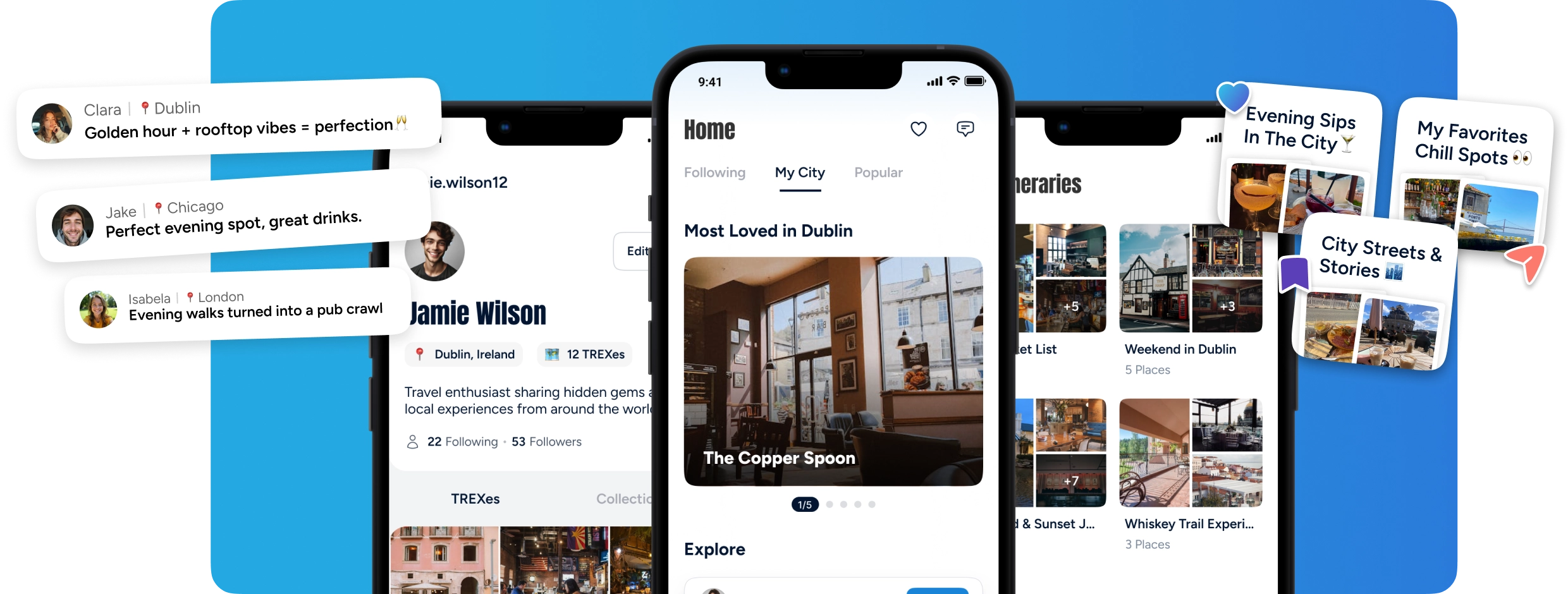
A scalable, mobile-first platform designed to replace generic ratings with authentic, personal place collections and effortless discovery.
Every great product begins with a simple yet powerful idea, and in this case, the vision was to create a social travel app where users could easily discover, save, and share their favorite places with others. Unlike traditional review platforms focused heavily on ratings, lengthy reviews, and promotional content, this platform aimed to offer a more personal, clean, and authentic experience. The goal was to help people recommend places naturally, just as they would in real life, through curated collections such as favorite cafés, hidden food spots, weekend getaway ideas, and must-visit destinations.
When the client approached us, they were looking for a mobile app development company that could transform this concept into a scalable MVP without compromising on simplicity or user experience. Our focus from the beginning was to create a modern, smooth, and intuitive platform that would make discovering and sharing travel experiences feel effortless and genuinely useful for users.
The Big Idea Behind The Product
The founders did not want to create another traditional review platform driven by ratings and generic feedback. Their vision was to build a space where people could recommend places naturally, just as they do in everyday conversations with friends and family. In real life, people rarely describe a place through ratings. Instead, they share personal suggestions like favorite coffee spots, hidden restaurants, top brunch locations, or weekend destinations worth visiting.
This insight became the foundation of the product strategy. Rather than focusing on star ratings, the platform centered around curated collections that allowed users to organize and share their favorite places in a more meaningful way. By enabling users to create themed lists and personalized recommendations, the app delivered a more authentic, personal, and engaging discovery experience.
The Challenges We Needed To Solve
While the concept sounded simple, building the right product experience required solving several important challenges. We also endured some serious challenges throughout our journey. But yes those challenges were important. Here are some challenges that we faced during the process.
Keeping the Product Simple
Many startups try to launch with too many features. Messaging, reviews, rewards, maps, live feeds, creator tools, badges, comments, and much more. The danger is obvious. Too many features at launch can confuse users and weaken the core idea. So our first priority was to keep the MVP focused, clean, and easy to understand.
Designing Around Real Human Behavior
Most apps are built around what platforms want users to do. We wanted to build around what users already do naturally. People think in categories, memories, moods, and recommendations. They organize ideas into lists. That meant the product needed to feel intuitive from the start.
Balancing Social Features with Utility
This app needed to be social enough to feel engaging, but useful enough to become part of daily life. Users should enjoy discovering collections from others while also using the app to organize their own future plans.
Making Places the Core Experience
Traditional social apps focus on posts. This product focused on places. That changed everything from design and navigation to backend structure and recommendation logic.
Our Product Thinking Process
Before starting the development process, we stepped back and focused on one important question that shaped the entire product vision from the beginning: what should feel effortless inside the app? This approach helped us stay focused on creating an experience that felt natural, simple, and genuinely useful for users. After analyzing user behavior and expectations, the answer became very clear. Users should be able to create personal place collections within seconds without confusion or unnecessary steps. That insight became the core guiding principle behind the platform's design and user experience. Every feature and interaction was then built around making discovery, saving, and sharing places feel smooth and intuitive. This foundation helped create a product experience that users could easily understand and enjoy from the very first interaction.
Collections as the Main Feature
Instead of encouraging random posts, we made curated collections the core experience of the platform. Users could create personalized lists such as Best Cafes in London, hidden beaches, favorite food spots, date night destinations, and restaurants worth visiting. This approach made recommendations feel more authentic and meaningful. Most importantly, collections gave users a natural and engaging reason to keep returning to the platform.
Removing Friction
We simplified the entire user experience by allowing users to search for places, add them to collections, include short notes, and instantly save or share them within seconds. The platform eliminated long forms, complicated setups, and unnecessary steps to keep interactions fast and effortless.
No Ratings in the MVP
This was a deliberate decision. Ratings often create pressure and low-quality engagement. Many people do not want to score every place they visit. Instead, if someone adds a place to "My Favorite Breakfast Spots," that recommendation already carries meaning.
Lightweight Social Features
We focused only on the social features that genuinely improved user engagement, including following users, saving collections, discovering trending places, sharing recommendations, and browsing curated feeds. This approach kept the platform interactive and engaging without making the experience feel overwhelming or cluttered.
How We Built The Product
Once the strategy was clear, we moved into execution in three structured phases. The whole process of development was divided into three phases. The first phase of the journey revolved around discovery and planning. The second phase followed the beginning of the process of development and in the third phase we tested and optimized the product for the users. Here, we are breaking down the phases.
Phase 1: Discovery And Planning
To successfully launch the product in the competitive tech market of New York City, we began the development process with complete clarity and a strong strategic foundation. Following the approach of an experienced software development company in New York, we collaborated closely with the founders to understand the product vision, market expectations, and long-term business goals before moving into development.
During the planning phase, we carefully defined key areas such as target users, core user journeys, MVP priorities, feature roadmap, technical architecture, potential risks, dependencies, and future monetization opportunities. This structured approach helped us avoid unnecessary development efforts, reduce future challenges, and maintain focus on building the features that truly mattered for the product’s success.
Phase 2: Product Development
This phase marked the transformation of the idea into a real product as our expert development team began building a scalable and user-friendly platform. Creating a frictionless onboarding experience was a major priority, which is why our team as trusted mobile app development company in Toronto focused heavily on user experience and first impressions. Users could quickly create profiles, select their interests, and immediately start exploring curated collections. Instead of focusing on vanity metrics, profiles were designed to reflect users' personalities and preferences through the collections they created and shared. The platform's core architecture revolved around flexible collection management, allowing users to create, edit, organize, privatize, and share personalized lists effortlessly.
We also developed a structured place-level content system that organized details such as names, categories, locations, photos, tags, and notes to improve search, filtering, and future recommendation capabilities. To keep the platform engaging, we introduced smart discovery features including personalized feeds, trending collections, popular places, creator updates, and advanced search experiences. Additional functionality like itinerary planning and messaging helped users turn saved places into actionable travel plans while collaborating with friends. Supporting the entire ecosystem was a powerful admin dashboard that enabled user management, analytics, moderation, and platform monitoring, giving the founders complete operational control.
Phase 3: Testing And Optimization
Once development was completed, we placed strong emphasis on quality assurance by thoroughly testing navigation flows, mobile responsiveness, speed and performance, search accuracy, collection creation workflows, and various edge cases and bugs. We also refined micro-interactions and usability details to enhance the overall user experience. The final product delivered a modern, mobile-first experience featuring intuitive screens for user profiles, curated collections, place detail pages, discovery feeds, saved itineraries, and messaging, all designed with simplicity, clarity, and ease of use in mind.
Results & Impact
The product delivered meaningful early wins by creating a smoother and more engaging user experience.
It also established a strong foundation for long-term growth and future feature expansion.
Lower Content Creation Friction
Users found it much easier to add places to collections instead of writing lengthy reviews or detailed feedback. This reduced effort encouraged more users to participate and share recommendations regularly.
Better Engagement
Collections encouraged repeat usage because users kept returning to update, organize, and improve their lists over time. This ongoing interaction helped build stronger user retention and deeper platform engagement.
Built Scalable Product Architecture
The platform was built with scalability at its core, ensuring it was fully prepared for future growth, evolving user needs, and new business opportunities. We created a strong technical foundation that could easily support future enhancements such as smarter recommendation systems, creator-focused tools, brand partnerships, premium features, and AI-powered travel discovery experiences, allowing the product to expand seamlessly over time.
One Key Insight We Learned
One of the biggest takeaways from this project was the realization that user behavior changes significantly when platforms focus on usefulness rather than attention-driven content. Instead of thinking about what to post for visibility, users naturally began curating meaningful recommendations, sharing genuinely helpful places, and continuously building valuable collections for others. This shift encouraged more authentic interactions, stronger engagement, and a more personal user experience across the platform.
What Comes Next
The MVP established a strong foundation for future growth by creating opportunities for advanced platform enhancements and community-driven experiences. Its scalable architecture opened the door for features such as smarter discovery algorithms, collaborative collections, trust and verification systems, improved messaging experiences, AI-powered trip planning, and the development of local creator communities, all aimed at making the platform more engaging, intelligent, and valuable for users over time.
Final Thoughts
This project reimagined how people share real-world experiences. Instead of relying on ratings, cluttered feeds, or forced content creation, the platform focused on something much more natural: helping people curate and share places they genuinely love.
By combining simplicity, utility, and thoughtful social design, we helped transform a great app idea into a scalable social travel app built for modern users. Sometimes the best digital products are not the loudest ones. They are the ones that simply feel right to use.

Author
Dhara Shah
Dhara Shah is a detail-oriented Quality Assurance Engineer with a strong background in information technology. Carrying her deep experience in testing and analysis, she now focuses on coordinating teams, optimizing workflows, and ensuring projects are delivered efficiently and on schedule. Dhara is known for her collaborative approach, responsiveness, and ability to align cross-functional efforts toward shared goals. She brings along a structured, results-driven mindset to every initiative she leads.
Begin Your Next Phase Of Digital Growth
Collaborate with a technology partner that understands your business goals and delivers solutions built for scale, security, and long-term success.
Schedule a Consultation